


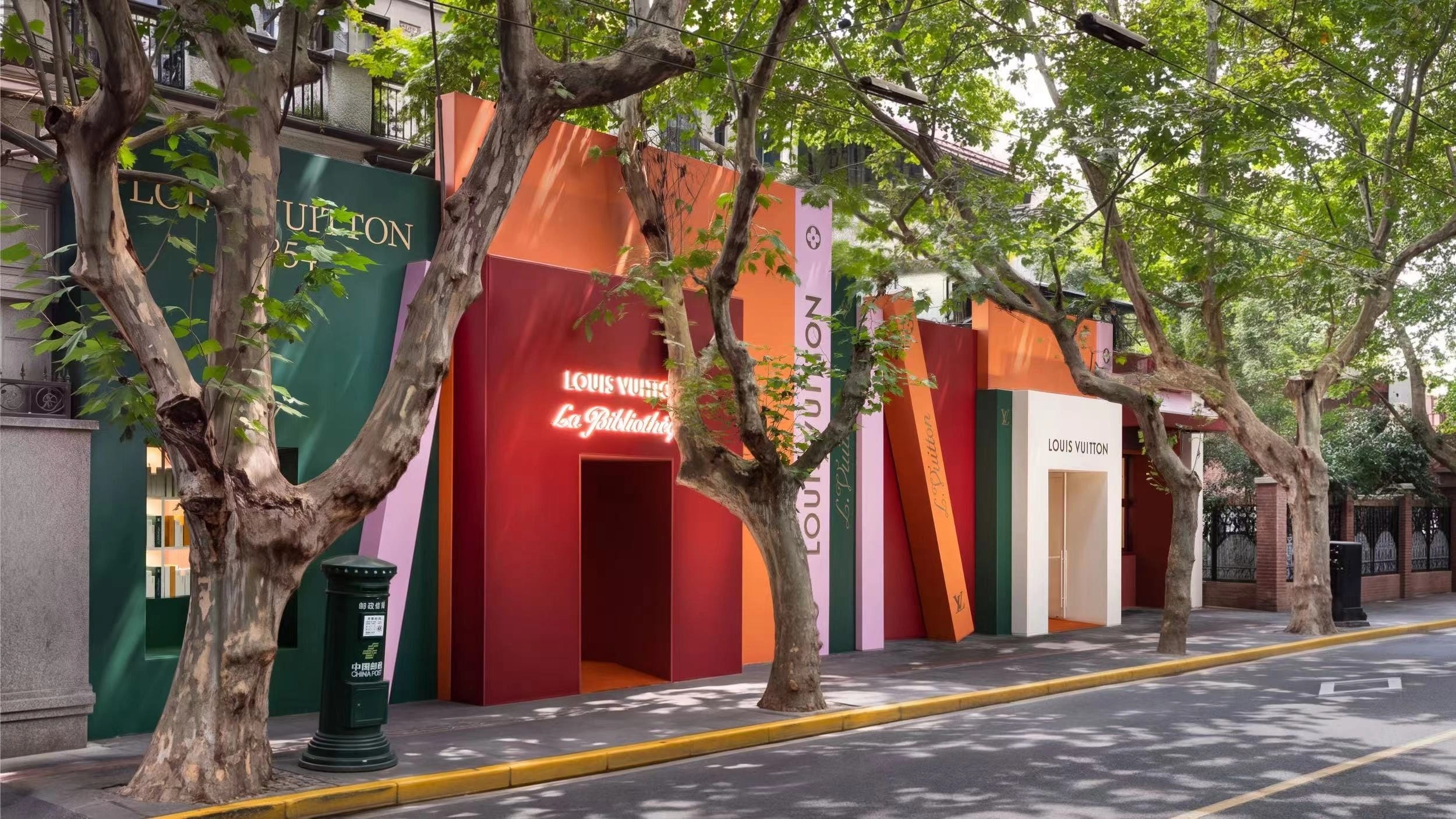
Recently, a row of giant books appeared beneath the plane trees on Shanghai’s Yuyuan Road. Interspersed with Louis Vuitton’s name and Monogram motif, the installation - La Bibliothèque - invited visitors to read, drink coffee, and select brand imagery to bind into custom albums.
Far from a standard retail store, the activation functions as a hybrid neighborhood third-space—combining a reading lounge, coffee bar, screen-printing studio, and curated bookstore takeover. Coming on the heels of multi-city activations across Beijing and Chengdu documented by Jing Daily [1], this is not an isolated marketing experiment. As the flagship house of LVMH, the world’s largest luxury group, Louis Vuitton’s strategy poses a central question for senior brand and retail leaders:
Is this a sign of a permanent shift away from the disposable pop-up?
For the past decade, temporary pop-ups were the default playbook for physical brand energy. But in major global capitals, high-frequency promotional activations have multiplied to the point of ambient noise. Short-term installations capture brief impression spikes, but the connection between the brand and its community of buyers vanishes the moment the structure comes down.
This newsletter has been developed using research from PSFK’s Fodda - an expert-led context layer available to use in your research and AI workflows.
Writing about LVMH’s retail activity in Jing Daily, writer Emma Li argues that Louis Vuitton has built is not a formula for neighborhood pop-ups, but an urban playbook for turning long-held cultural assets into locally rooted experiences that enter everyday life.
On recent earnings calls across luxury and retail sectors, there are signs of executive leadership facing mounting tension over store capital allocation. CFOs admit that they are scrutinizing high-cost, temporary marketing leases that yield rapid impression decay, prompting a strategic pivot toward physical investments that deliver durable customer equity.
According to the Deloitte 2026 Retail Industry Global Outlook report [2], retail leaders face acute pressure to balance capital discipline with physical experience. The report highlights that brands are moving away from high-density, single-use promotional stunts in favor of experience discipline - building physical presence that serves ongoing community routines and generates long-term value rather than transient noise.
The New Battleground: ‘Non-Shopping Time’
The most strategic physical interactions are no longer occurring inside commercial store aisles or mall concourses. They are happening during “non-shopping time”—the unstructured, passive hours woven into morning walks, coffee breaks, neighborhood strolls, and reading hours.
While traditional retail stores serve purposeful shopping, neighborhood third spaces capture unplanned, natural moments of daily life. Brands that enter these hours without forcing an immediate commercial transaction build a far deeper layer of brand memory.
This shift aligns with findings from PwC’s research report, The Future Belongs to the Deeply Human [3]. As digital feeds and automated touchpoints saturate daily life, consumers are actively seeking physical experiences that reflect “craft as humanity in marketing” - spaces that feel unhurried, intentional, and genuinely human.
Emma Li adds, “As brands move from stores into neighborhoods, they are entering not only new spaces, but different kinds of consumer time. Malls tend to serve more purposeful shopping and browsing, while neighborhoods are woven into walks, coffee breaks, exhibitions and meetings with friends, moments of ‘non-shopping time’.”
Sustained Urban Content Systems
Leading brands are proving that physical retail longevity requires replacing disposable props with modular content assets, creative hubs, and community infrastructure:
Louis Vuitton (LVMH): Content Archives & Local Co-Creation
Rather than inventing a new temporary theme for every launch, Louis Vuitton anchors its urban presence in its 28-year-old publishing archive—the Louis Vuitton City Guides and Travel Books [4]. At La Bibliothèque on Yuyuan Road, the house partnered with local independent booksellers - Baixin Bookstore, Archipelago Books, and Paper Moon Bookstore - to curate localized reading lists. By repeatedly re-entering cities through distinct local references (from Shanghai’s Suzhou Creek history to its Postal Museum), the brand builds an evolving, cumulative relationship with the urban landscape.
Apple: Creative Studios & Performance Hubs
Beyond retail sales floors, Apple has expanded its physical footprint into dedicated Apple Music Studios, live performance spaces, and creator labs [5] (such as Apple Music Studio Paris and Battersea creative spaces). Rather than driving device transactions, these spaces host live recording sessions, artist interviews, and creative masterclasses. By hosting non-shopping creative leisure, Apple embeds itself directly into the consumer’s artistic downtime.
Boots: Holistic Wellness Third Spaces
As outlined in its Boots Beauty & Wellness Trends Report [6], Walgreens Boots Alliance is reallocating physical footprint away from transactional beauty counters toward holistic health and community consultation hubs. By integrating quiet consultation lounges, skin diagnostic labs, and wellness third spaces, the retailer engages consumers during passive, non-transactional self-care routines.

Macro trends analyst Anu Lingala [7] defines the central evolution in consumer engagement as a shift from transactional retail touchpoints to passive third-space integration.
Based on the corpus of knowledge in the Fodda context later, the author of WHAT’S ANU newsletter would argue that when brands over-index on short-term promotional pop-ups, they capture brief, superficial attention while failing to anchor the brand in the consumer’s daily routines.
When her Human Agent is queried through Fodda, it explains that long-term brand equity is built during “non-shopping time”—when consumers are at ease in community, literary, or creative spaces—rather than when they are pushed to make an immediate purchase.
Real physical retail resilience comes from establishing authentic cultural infrastructure that enriches everyday lives, ensuring the brand footprint outlasts any temporary event.
“Pop-ups end,” writes Emma Li. “The same address moves on to the next brand, and the installations come down. What remains is whether people still remember why the brand was there, and what they read, made or felt while it was. Only when those experiences become embedded in the memory of a street, a walk or a city can a brief brand appearance leave a longer trace.”
Strategic Takeaways for Brand & Retail Executive Teams
Audit Your Non-Shopping Touchpoints: Evaluate where your brand exists during your customer’s unstructured downtime. If your footprint is restricted to ad feeds and point-of-sale aisles, you miss the hours where durable brand recall is formed.
Convert Campaign Props into Content Systems: Stop building single-use physical structures. Develop modular, reusable content assets—publishing archives, local podcast series, or workshop formats—that can adapt to local neighborhoods over time.
Co-Create with Local Ecosystems: High-profile addresses are table stakes. True physical relevance requires partnering with authentic local institutions (independent booksellers, regional artisans, heritage landmarks) that bring established neighborhood trust.
Sources & Fodda Research Links
[1] Jing Daily Primary Case Study — Explore with Fodda: Claude · ChatGPT
[2] Deloitte Insights — Explore with Fodda: Claude · ChatGPT
[3] PwC Industry Intelligence — Explore with Fodda: Claude · ChatGPT
[4] Louis Vuitton Publishing Archives — Explore with Fodda: Claude · ChatGPT
[5] Apple Non-Retail Footprint — Explore with Fodda: Claude · ChatGPT
[6] Boots Beauty & Wellness Intelligence — Explore with Fodda: Claude · ChatGPT
[7] Anu Lingala — Fodda Macro Trends & Strategic Foresight Analyst
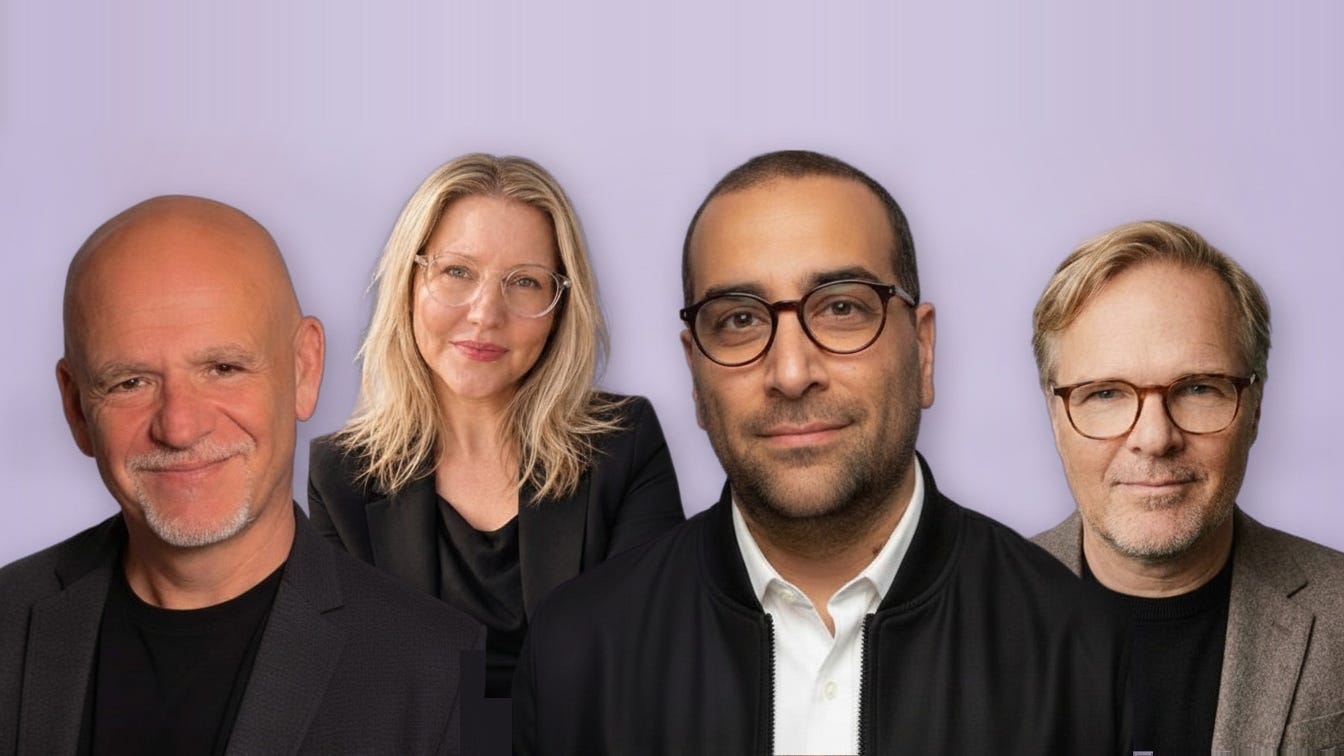
New Human Agents On Fodda
Last week saw the sign up of new experts you and your AI can query or use in your workflows. Check ‘em out:
Cristina DiGiacomo — Human & AI Co-existence, Moral Infrastructure and Accountability - Expert Profile · Query in: Claude | ChatGPT
Francis Anderson — Integrated Marketing Communications Strategy - Expert Profile · Query in: Claude | ChatGPT
Phillip Harvey — Strategic B2B Growth & Commercial Go-to-Market - Expert Profile · Query in: Claude | ChatGPT
Arthur Soleimanpour — Cultural Partnerships & Lifestyle Brand Experiences - Expert Profile · Query in: Claude | ChatGPT
Find out about how to become a Human Agent here.